
How many faces can you find?
If can find 0 – 5 faces – idiot
If can find 6 – 7 faces – stupid
If can find 8 – 9 faces – normal
If can find 10 – 11 – very normal
If can find 12 – 13 faces –genius


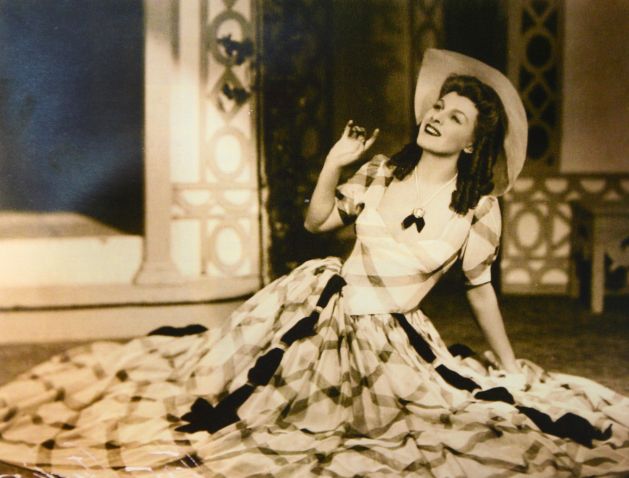


You could call it a great unlearning. Sixty years of technical mastery over raw materials have led, in the view of some wine producers, to a loss of the innate differences with which wine was once synonymous. How, though, to beat a retreat? "Natural" wine (made without additives) and "orange" wine (white wine made like red, by lengthy soaking of skins with juice) have been two of the most radical solutions. Classically trained palates often consider the results grotesque; younger drinkers find them fun. They're now a kind of punk wine – a disconcerting alternative to the mainstream, inspiring two separate London wine shows each spring and even threading their impolite way through the Michelin stars.
Much of the running for this movement has been made in Italy, inspired by the contadini (peasant farmers) who never bothered much with additives anyway, nor saw the point of treating white grapes differently from red. The movement's leaders, though, look further east, to Georgia, which is wine's Jerusalem; tributes and pilgrimages abound. Georgia's winemakers regard this as both gratifying and discomfiting.
Georgia is a land of multiple wine astonishments. Archaeologists are unsure whether wine's birthplace was in southern Anatolia or Transcaucasia; what is beyond doubt, though, is that Georgia is the only country in the world where winemaking methods that were developed up to 8,000 years ago have not only never been abandoned but remain in many ways best practice. Georgia's winemakers are the guardians of wine's oldest traditions, and they're happy that this is now both recognised and respected. The discomfort comes because they have learnt their considerable refinement and subtlety through thousands of vintages; much of this refinement is absent in the hit-and-miss natural-wine noise generated elsewhere.
There are two compelling reasons to seek out Georgian wine. The first is its repertoire of indigenous grape varieties: 525 survive, out of a total thought to have once numbered 1,400 or more. The second is, precisely, those old ways – the chance to taste wines that have been fermented in the buried, wax-lined clay jars the Georgians call qvevri. Both red and white wines can be made in these beautiful, maternally contoured vessels, whose size varies from flask-like to bear-sized. (Human skeletons have been found, in contented repose, within ancient jars.) In essence, red wines made in qvevri don't differ dramatically from "normal" red wines, which also ferment with their skins and pips, and sometimes their stalks too. Red wines made in qvevri, moreover, are often removed from the jars after fermentation for wood ageing, or for returning to a clean qvevri. This too mimics normal red-wine practice.
White wines made in this way, by contrast, are utterly different from conventional white wines. The Georgians call them "golden" rather than "orange", and they spend a full six months with skins and pips, as well as undergoing their entire fermentative cycle in contact with those materials and with the copious yeast deposits the cycle produces. The only external addition is, in most cases, a little sulphur after fermentation. The jars are then sealed and earth-covered for the ageing process. The result is a width, a tannic grip and a textural depth that no conventionally made white wine will ever have. The wines' aromas and flavours are singular too. Their acidity is muted, since they have all been through the acid-softening malolactic fermentation, while contact with the other matter in the jar, especially the yeast deposits, rounds the flavours further. In place of the fresh fruits that so many white wines suggest, these evoke dried fruits, mushrooms, straw, nuts and umami. They have less of an oxidative tang than their colours suggest; indeed, their articulation is often understated and quiet, though orchestral in its allusive range. They are meditative wines, sumptuous and subtle.
Not every Georgian wine, of course, is made in buried clay jars; the majority are made conventionally, and it is in these wines that Georgia's indigenous grape varieties can be appreciated most clearly, at least by palates unused to the thickening intrigue of the qvevri. The country may have a huge patrimony of varieties, but a few stand out for their quality.
The red variety Saperavi is the most commanding. It is deeply coloured (the name means "dye") and no less prodigious in almost every dimension, with astonishing energetic force in the mouth. A great Saperavi is shockingly good: no other words will do. The variety also blends well (with Bordeaux varieties Cabernet and Merlot, for instance) and is ideal for making the semi-sweet reds so popular in Russia. Other Georgian red varieties of note include the lighter Tavkveri and the fresh-flavoured Shavkapito, but Saperavi is the grandee.
There are, by contrast, at least three great indigenous Georgian white varieties. Rkatsiteli is the best known (its planting outside Georgia's borders, in Ukraine, Moldova and Bulgaria, helps to make it the world's fifth most planted white grape variety). Like Chardonnay, its style varies considerably with location and producer intent, but fragrance, vinosity, a crisp balance and a complex allusive repertoire are all possible.
My own favourite among Georgian white varieties is the subtle, hauntingly aromatic Mtsvane, a kind of Caucasian cousin of Rhône whites such as Marsanne, Roussanne or Viognier. Kisi is the third leading white variety, said to be floral and fresh, though the examples I tried were full-bodied and rich.
There are further nuances, as you'd expect from an 8,000-year-old tradition, including regional differences and a series of village "appellations" which imply particular blends of varieties. They all reinforce Georgia's message to the curious, though, which is that wine, great wine, is still more intriguingly diverse and more strangely beautiful than we thought.
Andrew's Picks
Georgian fine-wine producers:
• Alaverdi Monastery
• Besini
• Khareba
• Maisuradze
• Ch Mukhrani
• Pheasant's Tears
• Vinoterra/Schuchmann
• Wine Man
• Winiveria


Way more farmer than winemaker.
I spend as little time as possible in the cellar – cold and dark – and as much as possible in nature – green and light.
Some say there is some, of course there must be, but could anyone ever see a difference? The lake is always there.
Around 10, and I am very proud to have some vineyards planted in the 60s. The cool thing is that some are double-plantings, that means more freshness and vibrancy and less alcohol in the end – short version.
Riesling, Blaufränkisch, Pinot Blanc, Scheurebe, Cabernet Sauvignon, Grüner Veltliner, Zweigelt, Syrah, Cabernet Franc…
Imagine a big botanical garden, and among all these herbs, grasses, flowers, insects, birds and animals…there are vines as well.
There is one vineyard in the middle of the national park – about 200 grey geese are living there during the summer season. Some of them remain throughout the whole year.

(Photo credit: Michael Sager)
I mean it's 2017 and the basics are clear for everyone and I could tell stories about the moon and the stars in the sky but hey, I think it's very easy: the more freestyle the vines can grow, the better balanced they are (and a very nice detail: the same applies to the wines themselves). They (the vines) get just a little help with good compost and some straw to keep moisture in the soil.
Read my book when it is finished, Methode Laissez-Faire by Christian Tschida!
Oh man, what a question. If you want to know what real life is, start working in the vineyards!
Tasting the grapes, what else my friend?
Again, I taste the grapes, then decide whether to go to bed or not…
We are using Austrian barrels of between 1000-2500 litres. Most of the time I am quite happy with the results.
What a question – I love them! Describing wine is boring – I prefer to drink it.
The strongest emotion I have is during harvest, and then again at bottling. Then I send them out into the world, and forget them a bit. And then, for example, I taste a Laissez-Faire in a restaurant in Praha and think to myself, it was me, and a very strong emotion floods back.
When I was a kid and drinking champagne with zero dosage, I thought this mouthfeel must be minerality. To be honest, nowadays, I never think about it.
Every harvest we use around 10% of our grapes for new ideas, and if these experiments become very nice, we bottle them separately – one of these is our Brutal. In 2015 it stayed one year on the skins.
BRUUUUTAAAAALLLLL!!!
Why? Because I think the last few vintages [the wines] didn't need it anymore.
I prefer versus.
I like to have a good time with friends and only some of them are winemakers. And, yes, sometimes if need I talk about farming; But I prefer to talk about life, food, girls, love…quite normal stuff.
I really love one special style of wine – the light fresh and juicy one with vibrancy. It doesn't matter if it's red, white, black, orange, yellow, green, or whatever colour…
Like with people – It doesn't matter what colour.
Oh no, that question again.
I would love to use my methods to make nice Essencia in Tokaj/Hungary; or some Vin Jaune in Jura; or some dry wines in Catalunya/Spain; some Cabernet Franc in the Loire valley, or Australia; or…?

(Christian with Charlie Mellor. Photo credit: Michael Sager)
I think my methods show the answer.
Usually yes. These are tricky times – even instant soup is labelled 'natural' or 'organic'. These words are losing their real meaning. I prefer to tell people to trust their own palate. You can feel yourself how natural or not things are.

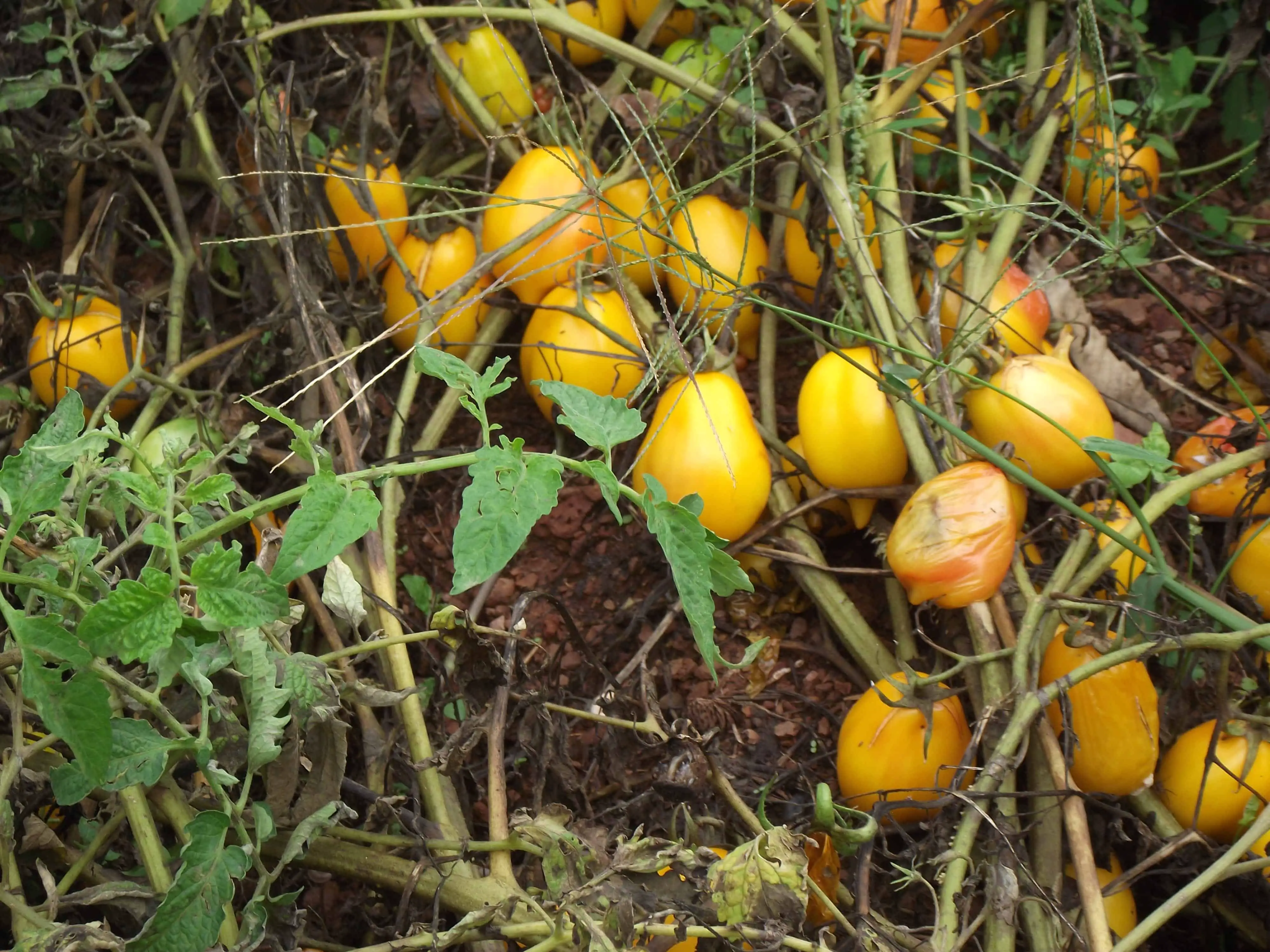 Ogni estate, i pomodori gialli a pera e altri Neri di Crimea crescono qui in una pazza abbondanza.
  Ha
allevato pecore e coltivato castagneti prima di specializzarsi nelle
sementi. Oggi semina su del terriccio, dentro una serra, quindi mette i
vasetti su un enorme mucchio di letame fresco, per cui la temperatura
nei giorni successivi arriverà a 70 gradi, riscaldando la serra e permettendo la germinazione dei semi.
Ha
allevato pecore e coltivato castagneti prima di specializzarsi nelle
sementi. Oggi semina su del terriccio, dentro una serra, quindi mette i
vasetti su un enorme mucchio di letame fresco, per cui la temperatura
nei giorni successivi arriverà a 70 gradi, riscaldando la serra e permettendo la germinazione dei semi.
 Ho
cominciato a piantare pomodori su un terreno pieno di sassi vent’anni
fa, e all’epoca non c’era una goccia d’acqua. Tutti pensano che facendo
così le piante muoiono, ma questo non è vero in effetti tutte le piante
sopravvivono. All’inizio abbiamo pomodori piccoli, ridicoli. Bisogna raccogliere i semi dei frutti e seminarli l’anno seguente. Allora si cominciano a vedere veri pomodori, possiamo raccoglierne 1 o 2 kg per pianta.
Ho
cominciato a piantare pomodori su un terreno pieno di sassi vent’anni
fa, e all’epoca non c’era una goccia d’acqua. Tutti pensano che facendo
così le piante muoiono, ma questo non è vero in effetti tutte le piante
sopravvivono. All’inizio abbiamo pomodori piccoli, ridicoli. Bisogna raccogliere i semi dei frutti e seminarli l’anno seguente. Allora si cominciano a vedere veri pomodori, possiamo raccoglierne 1 o 2 kg per pianta.
 Durante
la mia visita, molti hanno chiamato Pascal per ordinare delle sementi.
L’agricoltore vende i suoi semi a molte aziende bio, come Germinance.
Kevin Sperandio, artigiano sementiere di Germinance, ci spiega:
Durante
la mia visita, molti hanno chiamato Pascal per ordinare delle sementi.
L’agricoltore vende i suoi semi a molte aziende bio, come Germinance.
Kevin Sperandio, artigiano sementiere di Germinance, ci spiega: Una parte dei semi sono venduti illegalmente, perchè non sono iscritti nel catalogo ufficiale delle specie e varietà vegetali del GNIS (raggruppamento nazionale interprofessionale delle sementi e delle piante)
"I have a saying: Don't confuse poverty with laziness," says Doña Francisca Ros Gómez*, also known as Doña Fran. She is a 37-year-old single mother of four living in Huica, Huehuetenango, Guatemala. She is also a coffee producer, beekeeper, mushroom grower, gardener and excellent cook. Since 2012, Doña Fran began diversifying the crops that she grows as well as her sources of income. With unstable rainfall and temperature patterns in recent years, the coffee and basic grain harvests have been unpredictable. For rural people living in poverty, these changes affect their households drastically.

"Four years ago I started a garden on my property," says Doña Fran. "I went to some workshops with the Esquipulas Cooperative in La Libertad, of which I am a member." Standing in her garden, she points to the beets, carrots, onions, tomatillos, cabbage and radishes that are growing healthfully. "These are the herbs. We have basil, lemon verbena, parsley, cilantro, yerba buena, and that's chamomile." She shows me each plant, handling the leaves with a gentle touch.

"We learned organic composting. I throw layers of dried corn cobs, ashes from the kitchen, and green material onto the pile. I tell my kids to go out into the hills and bring back green plant matter, then we chop it up and layer it on." In March, she takes the compost pile out onto the concrete terrance and turns it. "If we are planting new coffee plants that year, I use it to start the seedlings. Otherwise, it goes back to the vegetables."
In 2014, Doña Fran lost 50 percent of her coffee harvest, which was her primary source of income at the time. Coffee leaf rust, a disease caused by fungal rust, devastated coffee crops all over Latin America over the last four years, so her situation was not unique. She started growing avocados, bananas, limes, papayas, oranges, peaches and squash, both for selling in town and to help feed her family. "Even still, we had to buy less food and stop buying new clothes. I also had more debt from taking out loans."


"That was when I doubled my oyster mushroom production." Doña Fran is the only person in her community cultivating oyster mushrooms. She has two mushroom farms, located in dark humid rooms that she added on to her house. She hangs plastic bags from the ceilings and fills them with corn cobs and black bean shells, both byproducts from her other crops. "I spray water on them and harvest daily. People come to my house to buy them by the pound." Each pound goes for 15 quetzales, the equivalent of about $2.00.
"Changes don't happen overnight," she tells me. "It's not easy to make people change things in their community. But the work we are doing here is for us, for our families. It is important to diversify in these times."
Doña Fran has been experimenting in the kitchen with all of her new produce. "As part of the organic gardening workshops, we had classes about cooking and nutrition for the family." A group of 25 women came to her house to attend the workshops. "We learned how to make jams and marmalades. People here never thought you could make jam out of vegetables, but we made some with beets and tomatoes. We made chard tamales, too."

One of the best desserts I've had in Guatemala was her popsicle made with jocote, an acidic orange fruit in the cashew family. "The most surprising thing was when they made us a drink with loquat and cucumber," she says. "It was actually really good! Now we incorporate these recipes with the fresh produce into our kitchens."
"It has been because of economic need that I've started all of these projects. Just because I am poor doesn't mean I am not going to sweep my house or bathe my kids. I realized that I had to start working harder to support my family. If I don't work, who will provide for us?"
*Name changed at interviewee's request.


